When readers ask about The Climber manga reading order and where to start, the answer might seem obvious: you start at the first volume. However, the reason this question gets asked so frequently is due to the sheer, unprecedented transformation this series undergoes. The Climber (known in Japan as Kokou no Hito) does not stay the same story it was when it began. What opens as a fairly conventional high school sports manga about indoor rock climbing slowly and masterfully mutates into an isolating, hyper-realistic, and deeply psychological thriller about extreme alpine mountaineering.
To understand how to read this series, you have to understand its unique production history. The manga is based on a novel by Jiro Nitta, which itself was inspired by the real-life legendary Japanese mountaineer Buntaro Kato. Initially, the manga adaptation was scripted by Yoshio Nabeda with art by Shin'ichi Sakamoto. As the series progressed, the original writers stepped back, and Sakamoto took full creative control over both the narrative and the artwork. This behind-the-scenes shift mirrors the protagonist's own journey from a crowded high school environment into absolute, freezing solitude.
If you pick up these books expecting a standard tournament arc, you will be caught off guard. You are signing up for an intense character study about obsession, alienation, and the sublime terror of nature. Here is exactly where to start and what to expect as you read through the first eight volumes currently available in our catalog. All of these volumes generally retail for under $25 and feature some of the most spectacular illustration work ever printed in the medium.
The Bouldering Beginnings: Artificial Walls
The earliest volumes of the series function as a brilliant deception. They introduce you to the mechanics of climbing while dressing the story in the familiar trappings of a shonen sports narrative. You get the new transfer student, the enthusiastic club members, and the arrogant rivals. But even here, Shin'ichi Sakamoto's art hints at the darker psychological underpinnings that will soon take over the entire narrative.
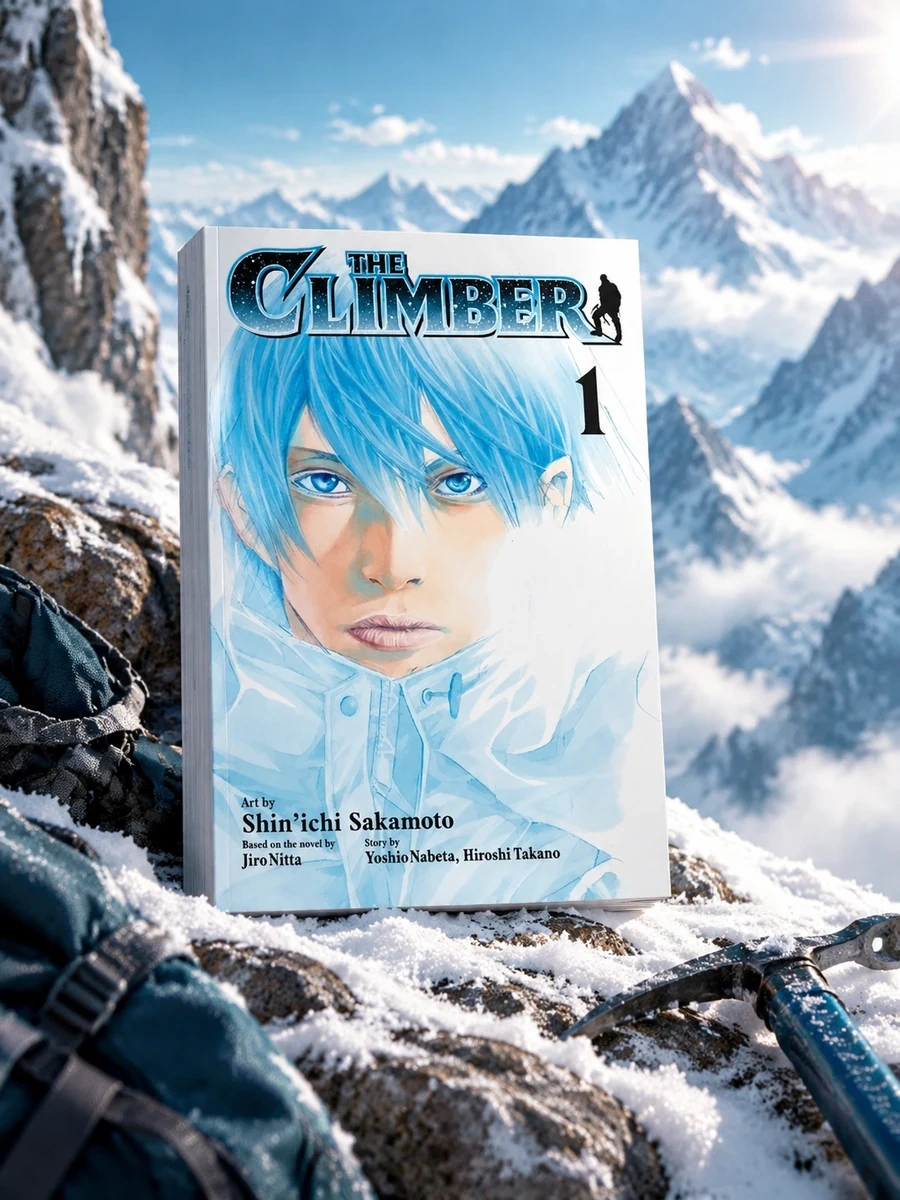
1. The Climber, Vol. 1 — Yoshio Nabeda
This is ground zero. We are introduced to Mori Buntaro, a deeply introverted and traumatized transfer student who wants nothing more than to be left completely alone. His aggressive isolation is interrupted when a classmate goads him into climbing the sheer exterior wall of the school building. That single, dangerous act of rebellion flips a switch in Mori's brain. For the first time in his life, he feels entirely alive and free from the suffocating expectations of society. This volume lays down the technical vocabulary of climbing—holds, crimps, routes—while establishing Mori's fundamental tragic flaw: his inability to communicate with people except through the extreme physical language of climbing.
2. The Climber, Vol. 2 — Yoshio Nabeda
The second volume pushes Mori into the world of competitive sport climbing. He joins the school climbing team, and we see the introduction of traditional sports tropes, including a fierce rivalry with an incredibly talented and highly social climber. However, instead of a story about teamwork and friendship, the narrative actively subverts these ideas. Mori does not want friends. He does not want to be a team player. He climbs purely for the selfish, intoxicating high of the ascent. Sakamoto's artwork begins to stretch its legs here, rendering the physical exertion, the muscular tension, and the raw grip strength of the characters with medical precision.
3. The Climber, Vol. 3 — Jiro Nitta
Here we see the credit shift to Jiro Nitta, the author of the original source novel. The narrative begins to strain against the confines of indoor climbing gyms and artificial holds. Mori is growing too strong, too fast, and too wild for the safety mats and colored tape of bouldering competitions. The story introduces the concept of free soloing—climbing without ropes or safety gear—which acts as a bridge between the sterile indoor competitions and the lethal reality of actual mountains. You can feel the tone of the manga shifting from a story about winning trophies to a story about surviving nature.
The Transition to True Alpinism: Leaving Society Behind
By the time you reach the middle volumes, the high school sports facade crumbles entirely. The narrative moves outward into the Japanese Alps, and the genre pivots into a psychological survival drama. The physical stakes change from a sprained ankle to death by freezing, avalanche, or catastrophic falls. This is where the series truly earns its reputation as a seinen masterpiece.
4. The Climber, Vol. 4 — Jiro Nitta
Mori steps off the artificial walls and onto actual rock faces. The introduction of harsh weather systems completely changes the dynamic of the manga. It is no longer about climbing faster than a rival; it is about managing stamina, reading weather patterns, and accepting the very real possibility of death. Sakamoto begins utilizing heavy visual metaphors in this volume. A difficult crag might be drawn as a literal pair of skeletal hands trying to crush the climber. The psychological weight of Mori's obsession begins to alienate him even further from the few people who try to care about him.
5. The Climber, Vol. 5 — Jiro Nitta
Winter climbing takes center stage. The technical focus shifts toward heavy gear, crampons, ice axes, and the agonizing physical toll of high-altitude freezing temperatures. The artwork conveys the biting cold so effectively you will want to put on a sweater while reading. Mori’s character development takes a darker turn as he realizes that to climb at the level he desires, he must sever his remaining ties to normal society. The manga asks a brutal question: is extreme greatness worth the cost of your humanity? For Mori, the answer is a terrifying yes.
6. The Climber, Vol. 6 — Jiro Nitta
The tension between society and the mountain reaches a breaking point. Whenever Mori attempts to integrate into regular life—getting a job, talking to normal people, participating in society—it ends in disaster. He is fundamentally incompatible with the lowland world. The mountain becomes his only sanctuary, despite the fact that it is actively trying to kill him. This volume cements the theme of isolation, showcasing how Mori's singular obsession makes him a danger not only to himself but to anyone foolish enough to rope up with him.
The Masterpiece Era: Surrealism and Solitude
In these later volumes, Shin'ichi Sakamoto asserts absolute dominance over the artwork and pacing. The dialogue becomes sparse, sometimes vanishing entirely for chapters at a time, replaced by sprawling, hallucinatory two-page spreads that communicate Mori's fracturing mental state. The series transitions from a story about climbing into a story about what climbing does to the human soul.
7. The Climber, Vol. 7 — Shin'ichi Sakamoto
Sakamoto is now listed as the primary creative force, and the visual storytelling explodes into sheer brilliance. The mountains are rendered with a terrifying, photorealistic majesty, while Mori's internal world is depicted through surreal, haunting imagery. He hallucinates dead climbers, visualizes the wind as predatory beasts, and treats the cold as a physical entity trying to embrace him. This volume requires you to slow your reading pace significantly; you have to stop and study the art to understand the narrative, as the text bubbles provide almost no help. It is a staggering achievement in visual communication.
8. The Climber, Vol. 8 — Jiro Nitta
The scope of the story widens from the Japanese Alps to the ultimate, lethal ambitions of the Himalayas, specifically K2. The existential dread of high-altitude climbing—the "Death Zone" where human bodies literally begin to die from lack of oxygen—looms over the narrative. Mori is no longer just a boy who likes to climb; he is a hardened, damaged, elite alpinist preparing for the most dangerous ascents on the planet. The preparation, the logistics, and the sheer selfishness required to undertake these expeditions are laid bare. This volume perfectly sets the stage for the harrowing, legendary final arcs of the series.
How to Approach Reading The Climber
When you start reading this series, you must calibrate your expectations. If you rush through the pages trying to find out who wins a competition, you will miss the entire point of the books. The Climber is a slow, methodical burn.
You have to allow the artwork to dictate your reading speed. When Sakamoto gives you a massive, silent two-page spread of a frozen rock face, you are meant to pause and feel the sheer scale of the environment compared to the fragile human body clinging to it. You also have to extend a great deal of patience toward Mori as a protagonist. He is not particularly likable. He is deeply flawed, frustrating, selfish, and emotionally stunted. But he is also fiercely, uncompromisingly authentic. Watching him suffer, grow, and throw himself against the most hostile environments on Earth makes for one of the most compelling reading experiences in the medium.
Start with volume one and trace the evolution. Watch how the cleanly drawn high school gymnasiums slowly give way to the chaotic, heavily inked, and snow-blinded peaks of the Alps. The series requires a commitment, but it rewards you with a staggering piece of literature that will stick in your mind long after you have finished the final page.